Home > News, events and publications > Case studies

Case studies

Meal deal

Being able to extend the shelf life of packaged food by just one day could substantially reduce the seven million tonnes of food which are discarded in the UK every year.

Against the grain

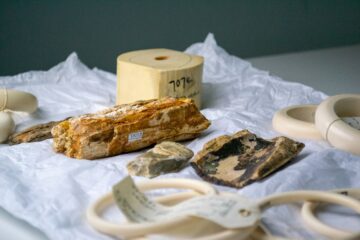
A single grain of salt can form on key components within a jet engine potentially accelerating corrosion.

  • Issued date: 04 June 2013
  • Type: Case study

Back pain breakthrough

Lower back pain affects 80 per cent of the population at some point in their lives, costing billions to the NHS and the wider economy through sickness leave.

Low carb material

EPSRC-sponsored researchers are tackling how to reduce the demand for carbon emission intensive materials.

  • Issued date: 31 May 2013
  • Type: Case study

Tooth technology

EPSRC-sponsored researchers at University of Leeds have created a ‘non-invasive’ dental treatment which could help the 31% of adults affected by tooth decay.

Printing buildings

EPSRC-sponsored engineers at Loughborough University have developed an innovative 3D printing technique to create customised panels for large-scale buildings.

Safety by design

A software tool which protects the functionality and security of computer systems has been developed by EPSRC sponsored researchers at University of Oxford.

  • Issued date: 30 April 2013
  • Type: Case study

Pipeline power

Award-winning technology developed by Syrinix, a company set up to commercialise EPSRC-sponsored research at the University of East Anglia, has developed ‘listening’ technology that can help reduce treated water lost every day in the UK.

Flight of the Demon

In 2011, Demon, an unmanned aircraft developed through EPSRC’s Strategic Partnership with BAE Systems, became the first aircraft in the world to fly without the use of flaps - and into the Guinness Book of World Records.

The wonder stuff

Wonder material graphene, the strongest, thinnest material there is, has a host of amazing potential applications – from flexible electronics to superlight aircraft.

  • Issued date: 25 April 2013
  • Type: Case study

Crest of a wave

Aquamarine Power, a hydro-electric wave energy company set up to commercialise EPSRC-funded research, has installed two unique Oyster wave energy converters at its offshore Orkney site.

  • Issued date: 24 April 2013
  • Type: Case study

Follow the sun

Cheap solar power might soon be possible thanks to a new type of flexible, organic solar panel developed by an EPSRC-sponsored research team at the University of Warwick and Molecular Solar Ltd.

  • Issued date: 24 April 2013
  • Type: Case study

Pipe dreams

OXEMS, a company created to commercialise EPSRC-funded research, has developed a unique sensor device to detect underground assets such as water pipes, sewers and cabling without the need for excavation.

The sky's the limit

The European Space Agency’s Galileo satellite navigation system is being launched with technology developed by British satellite manufacturers Surrey Satellite Technology Ltd.

Whisky a no-no

In an industry with an export value to the UK of £2 billion, counterfeit whisky bootlegging is a serious and expensive problem.

Keeping mum

An ultra-low-cost scanner that can be plugged into any computer to show images of an unborn baby has been developed by EPSRC-sponsored engineers at Newcastle University.

Deep impact

EPSRC-sponsored research at Cranfield University has led to world-record depths in subsea welding technologies used to repair and maintain vital offshore gas and oil pipelines, oil rigs and tidal energy systems.

  • Issued date: 17 April 2013
  • Type: Case study

Centres of attention

1,300: The number of new doctoral level manufacturing engineers thanks to a 10-year EPSRC investment programme in 15 dedicated Innovative Manufacturing Research Centres (IMRCs).

Car diets

Research at the EPSRC-funded Loughborough University Innovative Manufacturing Research Centre has helped replace copper wiring used in cars with printed flexible circuits.

The midas touch

EPSRC-sponsored scientists at the University of Southampton have discovered how to change the colour of the world’s most precious metal, gold.

Light work

Over 1.6 billion people – one fifth of the world’s population – lack access to electricity via a grid, and pay high prices for fuels such as kerosene to serve their basic needs.

Size matters

Of all clothes currently bought online, up to 60 per cent are estimated to be returned to the retailer.

Sky’s the limit for UK satellite company

In 1985, supported by an EPSRC grant, a team of gifted aerospace researchers from the University of Surrey formed a company, Surrey Satellite Technology Limited. It is now a world leader in its field, and has launched over 30 space missions.

Unravelling the genetic code

Understanding how to manipulate tangles of DNA could help us create new treatments for diseases, so mathematicians are working with biologists to explain how our genetic code becomes knotted.

Taking decisions, not risks

Risks are an unavoidable part of modern life, but mathematicians and statisticians have developed a variety of methods to help mitigate its effects.

Stats in your genes

Sequencing the human genome was a fantastic achievement, but it was only the beginning. Now, statisticians are coming up with new methods to sift through large amounts of a genetic data and identify the differences in DNA that can lead to diseases.

Smarter phones for all

The amount of information we can transmit though the air is limited by the laws of physics, but the mathematics of signal processing lets us squeeze more data into the same amount of space.

Scans on the brain

Brain scans play a vital role in the treatment of many serious medical conditions, but decoding the signals inside our minds would not be possible without a variety of mathematical techniques.

Networking for the future

Mathematical network theory lets us create models of our communication and transport networks, revealing new patterns and insights that will improve network capacity, reliability, and efficiency.

Modelling an epidemic emergency

Epidemics can threaten the lives of both humans and animals, so it is essential that we react swiftly to any outbreaks. Mathematicians play a key role in assessing the risks of disease transmission and modelling the effects of vaccination programmes.

Go with the industrial flow

Mathematical models of fluid flow can help to improve manufacturing efficiency and reduce costs, while also enabling new applications of fluids within industry.

Faster Formula One

Every second counts in the fast-paced world of Formula One, so race teams use advanced mathematics to squeeze the best performance out of their cars.

Danger: rogue waves

Rogue waves appear without warning, towering high over ships and oil rigs. Traditional mathematical models couldn’t predict the occurrence of these dangerous waves, but the latest techniques let oceanographers make accurate forecasts.

Building the digital society

Computers and networks stuffed with ever-increasing amounts of data are transforming our society, creating a digital world with its own rules and behaviours.

An energy evolution

As oil supplies become harder and more expensive to reach, it’s essential that we maximise the yield from available reservoirs in any way possible.

Advancing the digital arts

The computer animation industry relies on a steady stream of mathematics to produce the fantastic images found on our cinema and television screens.