EPSRC logo
 Home | Back | Site Map | Events | Logos | Feedback | Help | Contacts     
 Newsline 33 - Perfect 10 
 Newsline 34 - Powering Tomorrow 
 Newsline 35 - Smart Structures 
 Newsline 36 - 'Robot Mole' to the Rescue 
 Newsline 37 - Green to Go 
You are here:

Newsline 35 - Smart Structures
 

How termites could inspire a revolution in construction: Just one story from the latest Newsline which features a special report on adventure and creativity.

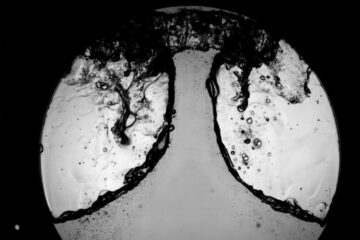
It took researchers two months of fieldwork to scan in two-dimensional slices of the termite mound architecture so that it could be turned into a 3D computer model ready for further study. They also captured variables including gas concentrations, permeability and wind conditions.

What if buildings could deliver comfortable living conditions come rain or shine using only renewable energy from the sun and the wind? Such structures are already being built not by humans but by termites. “It’s like burying a calf below ground and giving it an environment that not just keeps it alive but enables it to thrive,” Dr Rupert Soar comments of the termite colonies living beneath the African plains.

These termites construct mounds in order to regulate the atmosphere, humidity and temperature of their nests. Now Dr Soar and colleagues are hoping to understand how these insect builders do it and see if this knowledge can inform human design and construction using the latest rapid manufacturing technologies.

“Imagine, instead of today’s solid bricks and walls, smart bricks and smart walls incorporating capillary-like structures…”
Dr Rupert Soar

Taking the world’s largest slice and scan machine to Namibia to map the mounds built by the termite Macrotermes michaelseni in three dimensions is just one element of this truly adventurous EPSRC-funded project. Dr Soar points out that humans have already been inspired by termite ‘chimneys’ to build vertical spaces in buildings to move air around. Macrotermes michaelseni don’t build ‘chimneys’ but still manage to maintain constant environmental conditions (homeostasis), so how do they do it? “Is the termite mound like a block of flats with termites constantly interacting with the structure, the equivalent of opening and closing windows?” says Dr Soar, “or are the mounds built from smart materials, mixes of clays and polymers that control the movement of gases at a molecular level? Or could it be that the geometry of the structure enables it to filter gases like a giant gill?”

So far the researchers have found evidence that all these factors are important. 3D visualisations of the mounds, recently reconstructed by the project team from the scanned 2D slices, show a vein-like network of channels and thinner capillaries. The complicated nature of these structures is even more surprising when you consider that they arise from emergent behaviour rather than design.

Understanding how these structures work is only one side of the project, the other is seeing how this knowledge might be applied. “We’re certainly not suggesting that people should live in termite mounds!” Dr Soar tells us “we are studying the mounds to look for a method by which environmental conditions can be controlled and then seeing if we can harness this using innovative manufacturing processes.” If successful the work could lead to a revolution in construction: “Imagine, instead of today’s solid bricks and walls, smart bricks and smart walls incorporating capillary-like structures that can move and control moisture, gases and temperature.”

The first 3D visualisations of termite mound structures have been created using the fieldwork data. These are already starting to give insights into the mound’s unusual geometry and how these might inform the design of ‘smart’ building materials.

The researchers hope to develop new construction methods based on rapid manufacturing processes that would enable buildings to be ‘printed’ out of extruded materials. Such ‘freeform construction’ processes would give architects the freedom to design complex organic forms with microstructures and properties unlike anything that can be manufactured conventionally. “This could make the dream of passive systems, which keep our homes comfortable using only renewable energy, a reality,” comments Dr Soar.

More Information

Sandkings
Research studying termite construction

Freeform Construction
Innovative construction techniques

Newsline 35
Further highlights of adventurous and creative research as well as articles on many other subjects are available from the latest edition of Newsline:

  • Thinking machine investigates consciousness
  • Weird reactions open up new chemistry
  • Cosmic dust could be the stuff of stars
  • Touch and go with new tactile maps
  • Synthetic textiles that can stand the heat
  • Face fits for evolutionary composite system
  • Joke machine boosts children’s wordplay
  • Superfluids shed light on turbulent problems


Last modified 20 September 2007
 
Contacts:  Victoria Bradley
 
Printer Friendly Printer Friendly

 
  Help | Events | Feedback | DisclaimerLogosAccessibility